The Belgian National Railways have two amazing examples of Santiago Calatrava’s architecture; one is the station at Liege and the other at Mons. Both are unlikely locations for world class architecture. Both are well worth a visit.
You can see my images of Liege Guillemins station here in my gallery. A few weeks ago I was able to make a brief visit to Mons for some day-time and at night photography of the new station there.
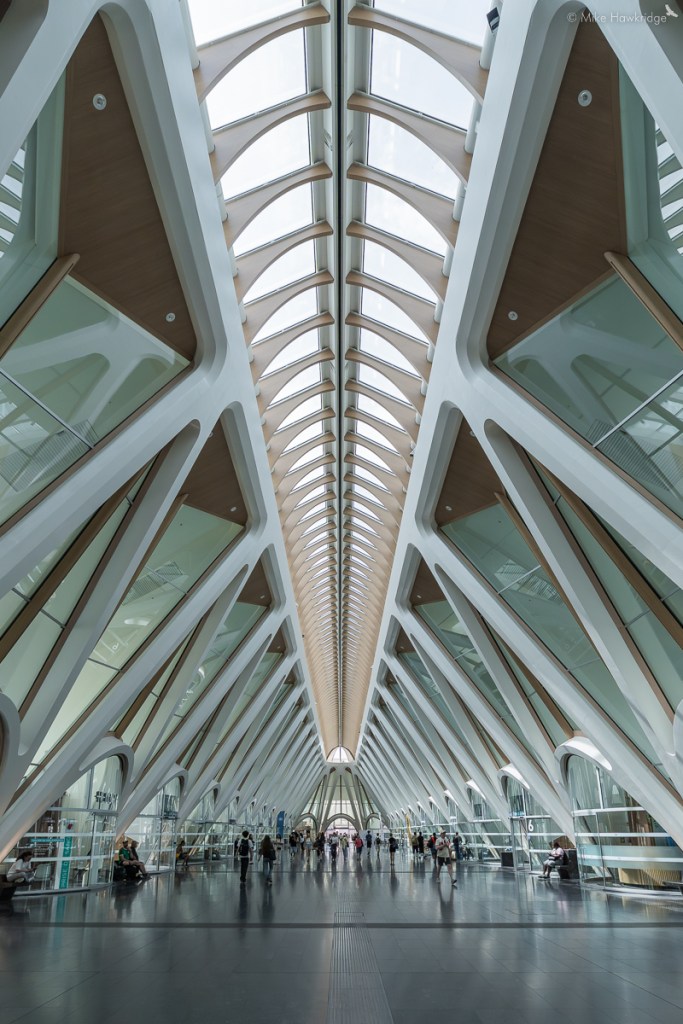
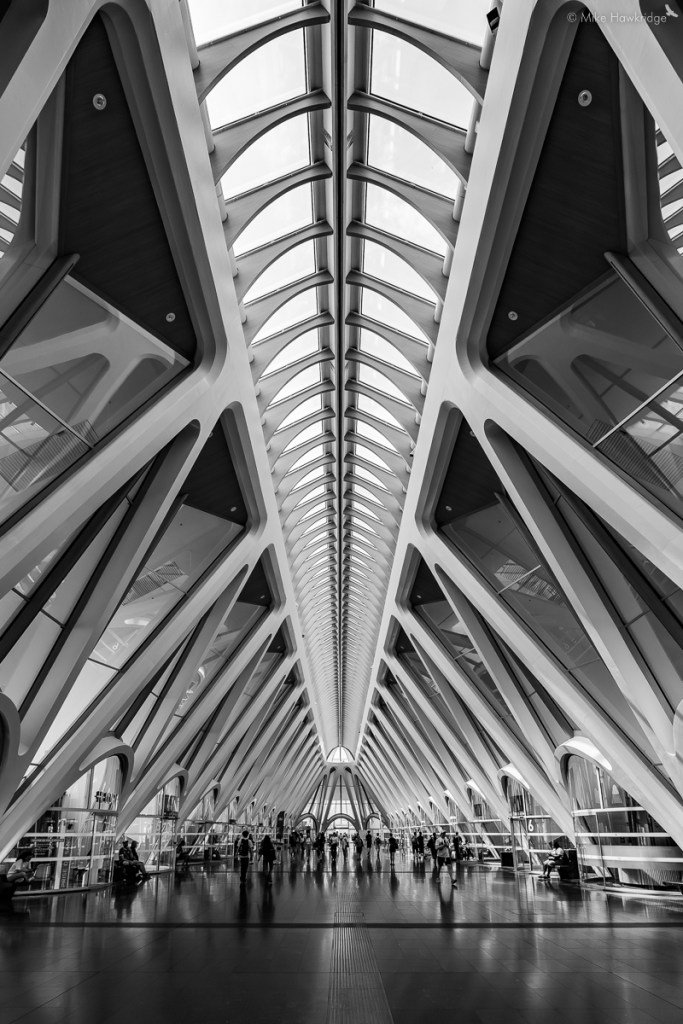
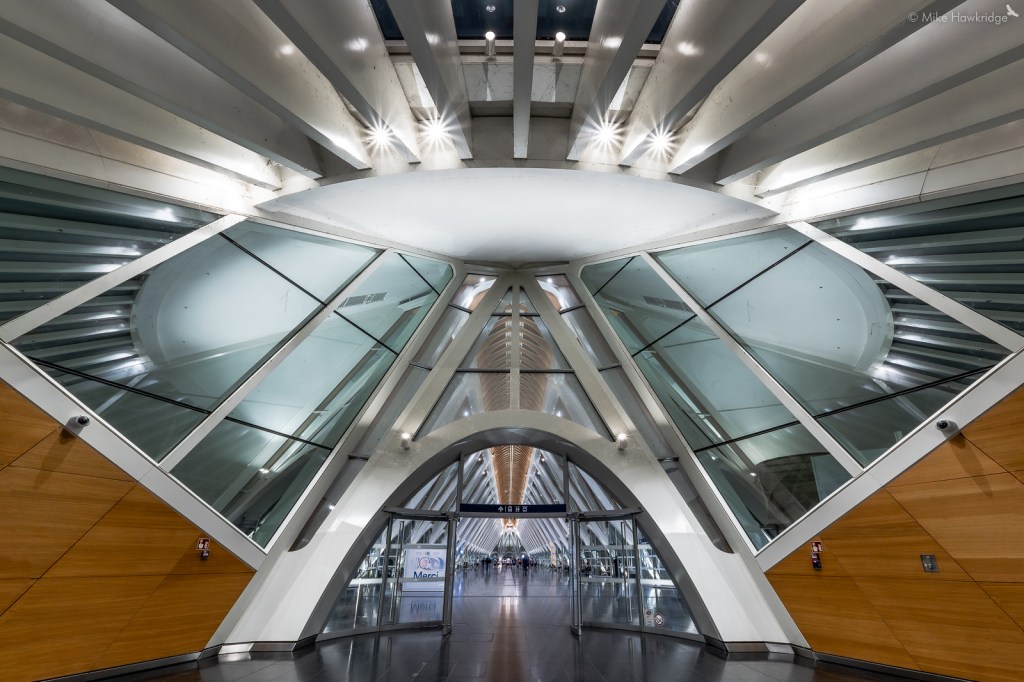
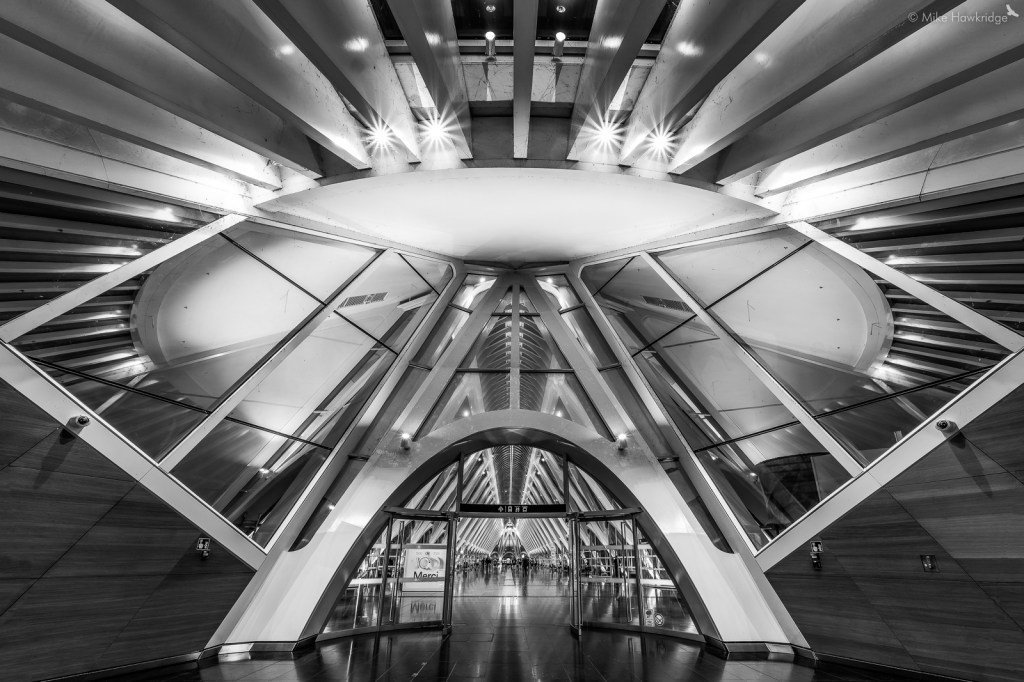
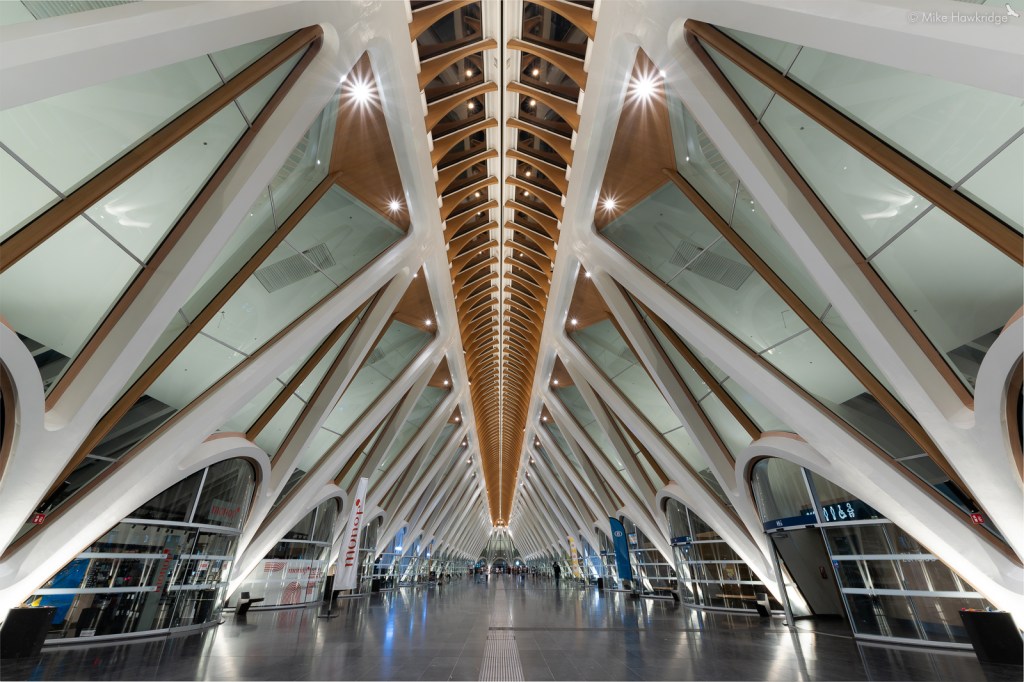
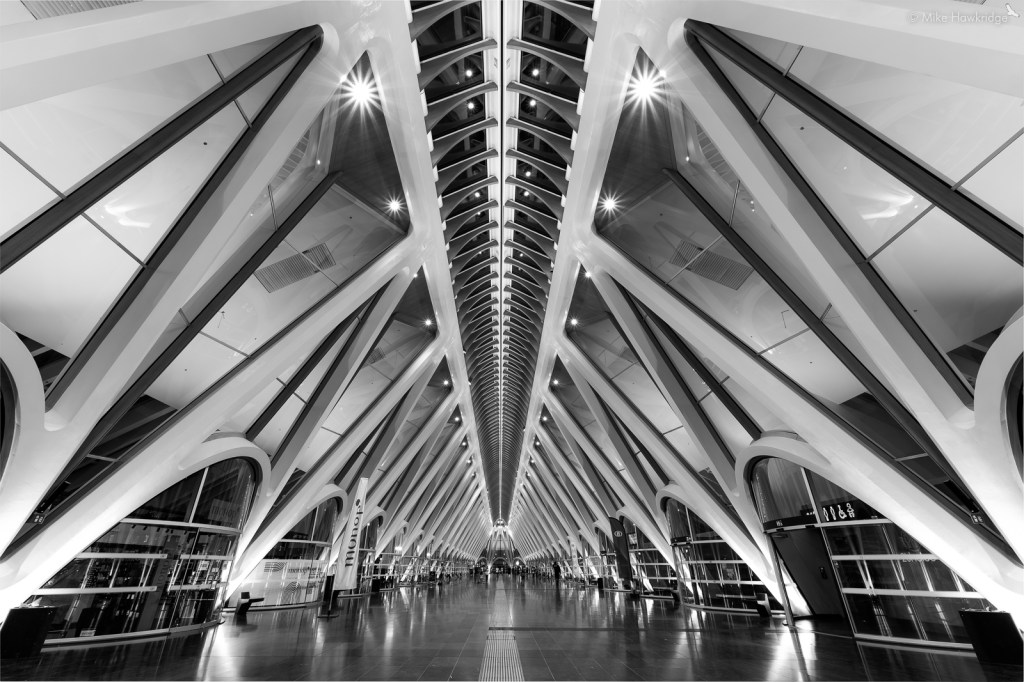
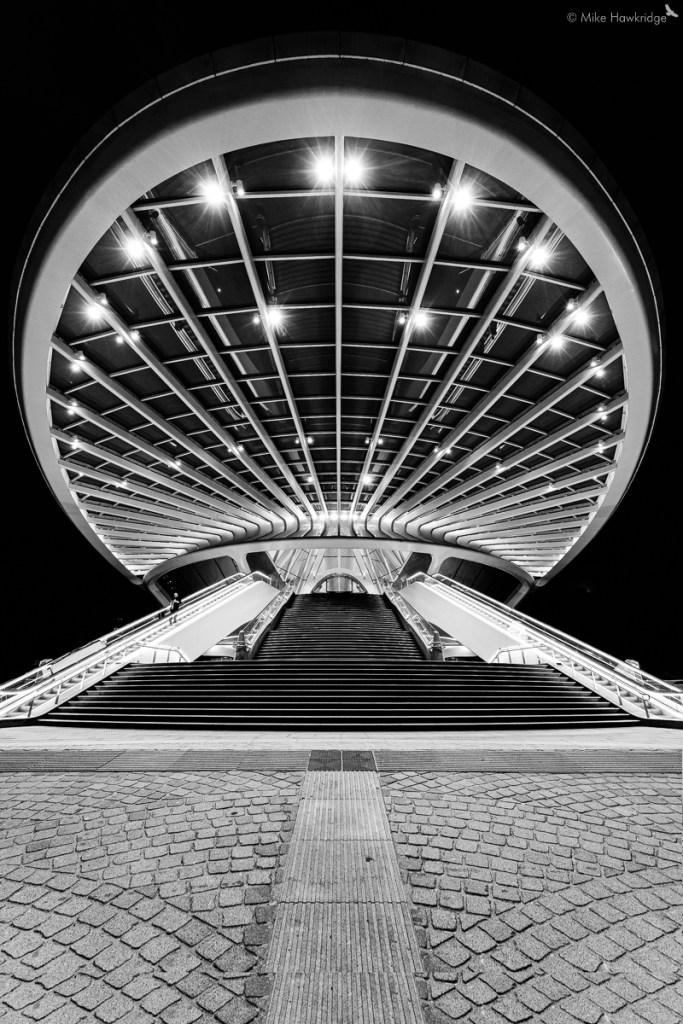
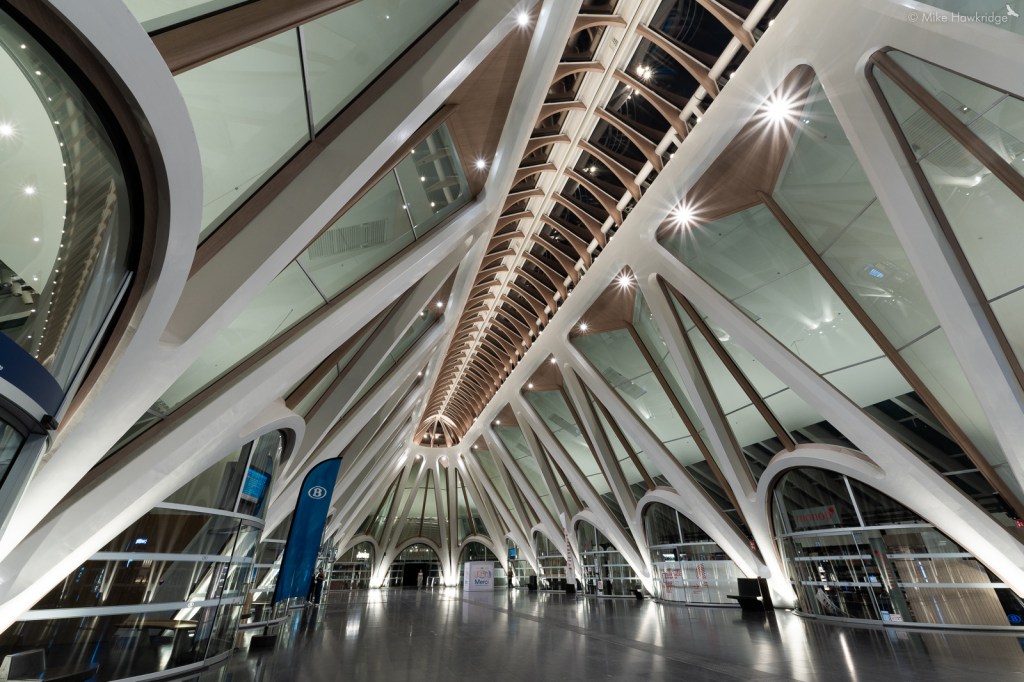
Mons station is another stunning example of Calatrava’s style, though much simpler than the Liege station and so with fewer photographic opportunities. My feeling is that photographically it works better at night and possibly better in monochrome. Let me know what you think. You will need the widest possible lens to capture the high cathedral-like arcing roof. I was using a 9mm prime lens and a 10-18mm zoom on an APSC camera. Unlike at Liege, I never used anything longer than that. There seemed to be no problem with me using a tripod and the security people (of which there were plenty in evidence) took no notice of me. I guess they are used to photographers. Some of the images below are multiple exposures layered in Photoshop with some of the people removed that way; that technique is impossible without a tripod.
My timing was unavoidably not good. It was the Friday afternoon of the Mons “Doudou”, officially the Ducasse de Mons, which is a centuries-old UNESCO-recognized folk festival. It goes on all weekend and amongst many other things, involves a procession where a sacred 17th-century golden carriage carrying the shrine of Saint Waltrude (the city’s patron saint) is pulled up a steep slope. According to legend, it must make it up in one attempt or the city will suffer a year of bad luck.
The station was as busy as it ever gets, to the extent that daylight photography was rendered almost impossible. A constant stream of people were arriving on trains; others were using it as a footbridge connecting a car parking area to the town and the action. I found a couple of hours late evening when people had already arrived and were at the free concert in town, and the station was less busy.
It just goes to demonstrate the importance of checking everything possible before embarking on a dedicated photography trip. In this case I had no choice of date as I was on my way home from elsewhere, but had it been a dedicated visit it would have been disastrous.
Whereas at Liege I spent nearly three days photographing the station and would happily go back again, to be honest, I think a few hours at Mons station in the daylight and again at night is sufficient to do it justice.
Choose your moment wisely!
 Mike Hawkridge Photography
Leave a comment